What was broken
Real-estate referrals move informally. Leads are traded through personal networks with inconsistent quality, unclear accountability, and no reliable structure for compensation or compliance.
Marketplace
Real-estate referral and lead marketplace
Shown as case studies of my work; not offered as products or services.
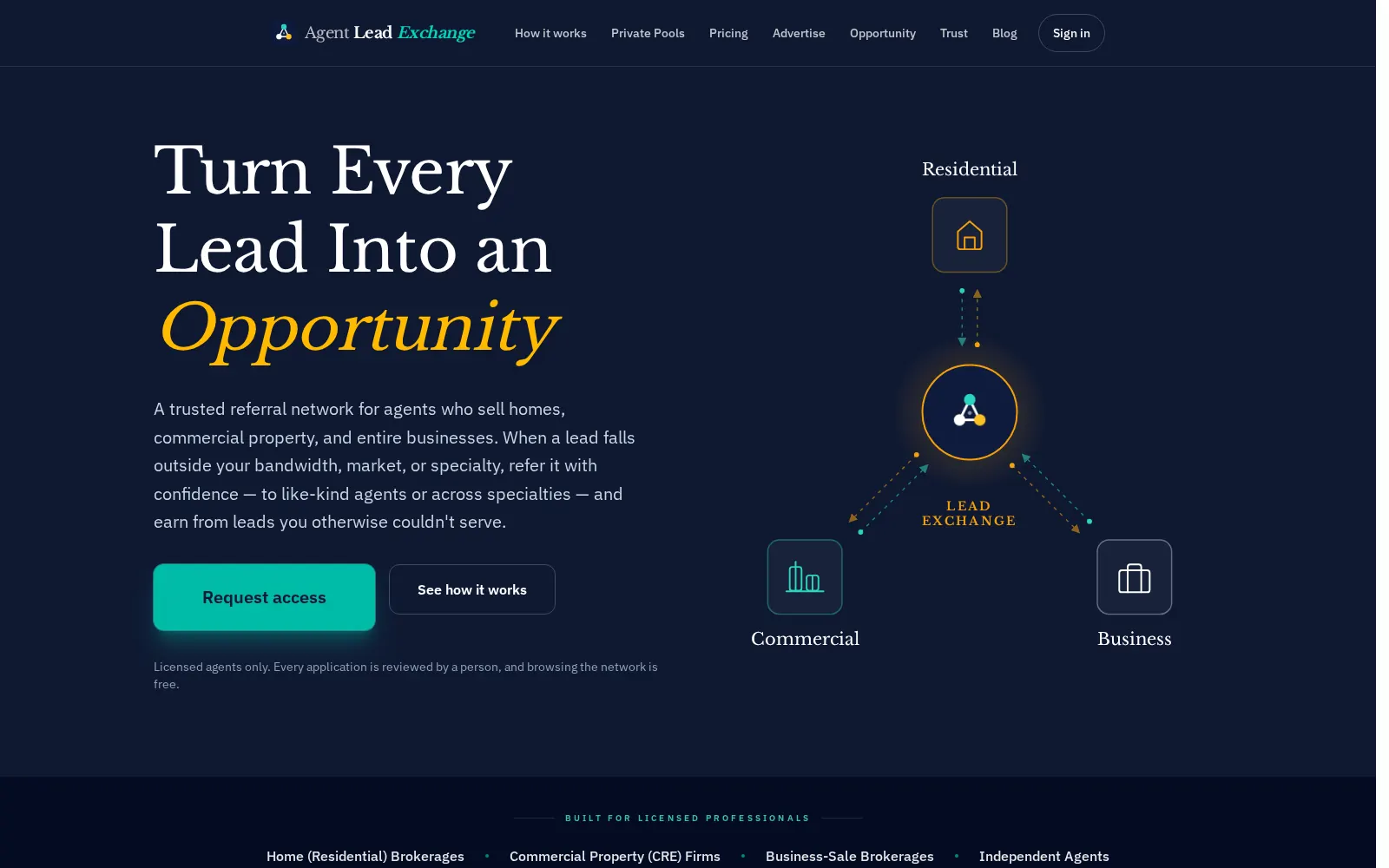
Agent Lead Exchange began with a colleague in residential real estate who needed a better way to manage leads she referred to other agents. Following every referral through completion was tedious but essential, and the manual work was limiting how much business she could handle.
I connected that need to a broader opportunity: agents in different specialties regularly encounter work they can’t serve well themselves. A residential agent with a business-sale opportunity, for example, could refer it to a business broker and earn a referral fee if the transaction closes. I enjoyed building the platform because it joined several parts of the real-estate and business-brokerage ecosystem around a practical workflow problem.
I set the direction across these business, operating, market, and product workstreams. AI-assisted development is one part of the work — not the whole of it.
The entity, the marketplace model, and the harder decision underneath it: who the customer is on each side and what the platform is accountable for between them.
What a lead is worth, who pays, how disbursement works, and how subscription, advertising, and directory revenue fit together without one cannibalising the others.
Real-estate referral and broker compliance requirements — licensing constraints, compensation rules, and the safeguards brokerages require — translated into platform rules rather than terms of service.
Payment and disbursement handling, participant onboarding, dispute and quality processes, and the support model behind a marketplace where both sides need recourse.
The cold-start problem: which side to build first, how to reach agents and brokerages, and what makes an informal referral network move to a structured one.
Routing rules, reputation model, multi-sided permissions, product direction, and the AI-assisted development used to make the concept tangible.
Real-estate referrals move informally. Leads are traded through personal networks with inconsistent quality, unclear accountability, and no reliable structure for compensation or compliance.
A referral is a transaction. Given a clear structure for routing, reputation, and disbursement, informal trading can become a marketplace with defined rules for both sides.
Design the economics before the interface. Establish who pays, who benefits, what a good lead is worth, what safeguards brokers require, and how the marketplace stays balanced as it grows — then build the workflows that enforce it.
Directing the connected decisions behind a two-sided business — economics, compliance, monetization, operations, market, workflow, and AI-assisted product development — where weaknesses in one area affect the entire model.
A structured referral marketplace: opportunities come in, rules decide who sees them, and compliance requirements are enforced by the platform rather than by memory.
Layer 1
Who sends and receives opportunities.
Layer 2
Rules decide who sees an opportunity and when it moves on.
Layer 3
The commercial and compliance logic of the marketplace.
Layer 4
Help and administration built in.
Rules that decide which participants see which opportunity, and when it moves on.
Broker-compliance requirements expressed as platform rules rather than policy documents.
Brokerage and participant boundaries enforced at the platform level.
A reusable AI support layer built into the platform: platform-specific knowledge grounding, AI chat support, escalation to a human, support-ticket handoff, and administrative controls.
AI Support and multi-tenant separation are architectural patterns reused across the platforms rather than rebuilt each time.
Marketplaces are decided by incentives and trust, not features. Product economics has to be designed at the same time as the workflow.
A decade of sales leadership and revenue responsibility, plus current real-estate and transaction work. I’ve spent my career on the side of the table where incentives and trust are earned.
Operating platform
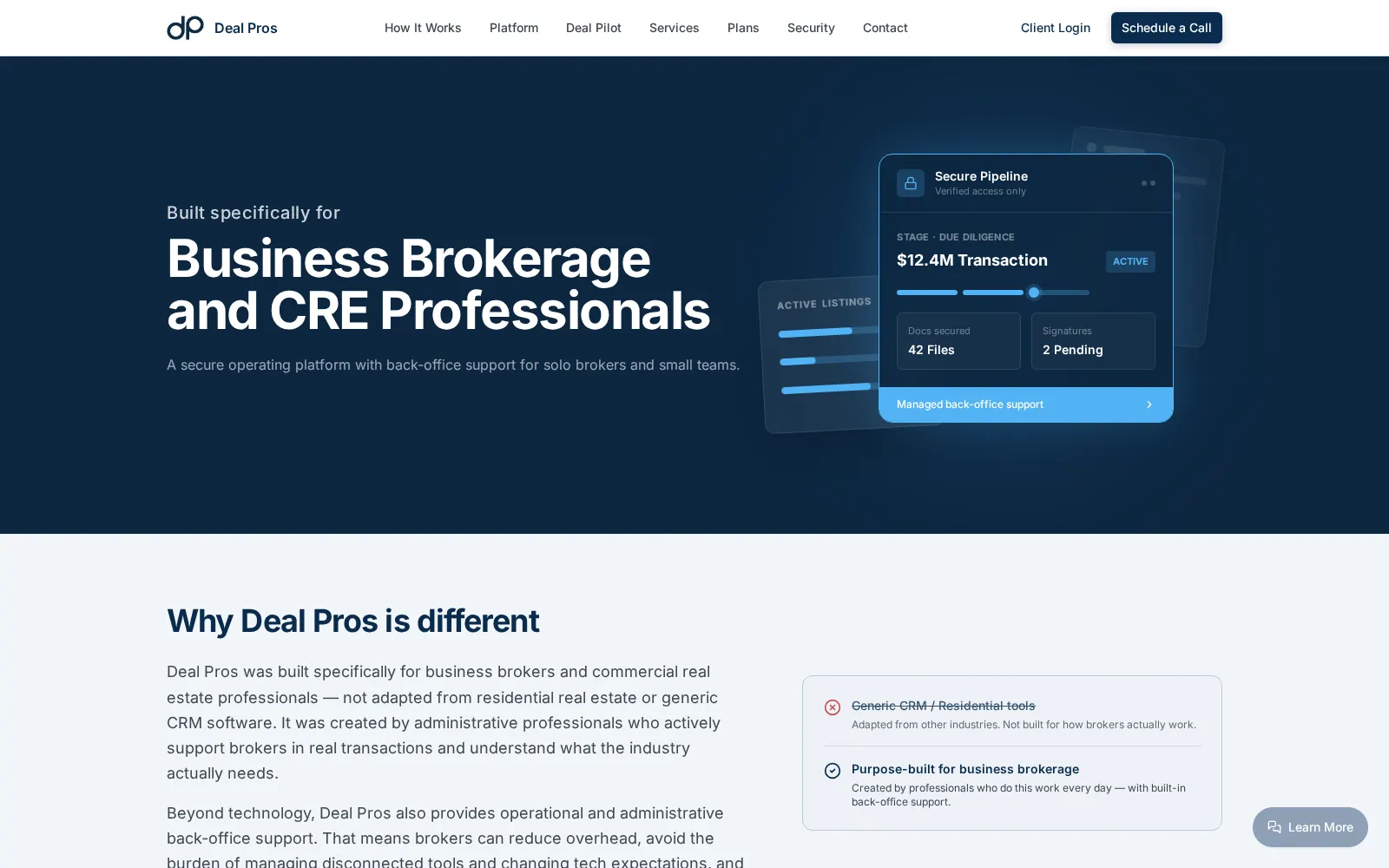
Business brokerage operating platform

AI platform
AI platform for consumer, family, specialist, and enterprise use
Marketplace
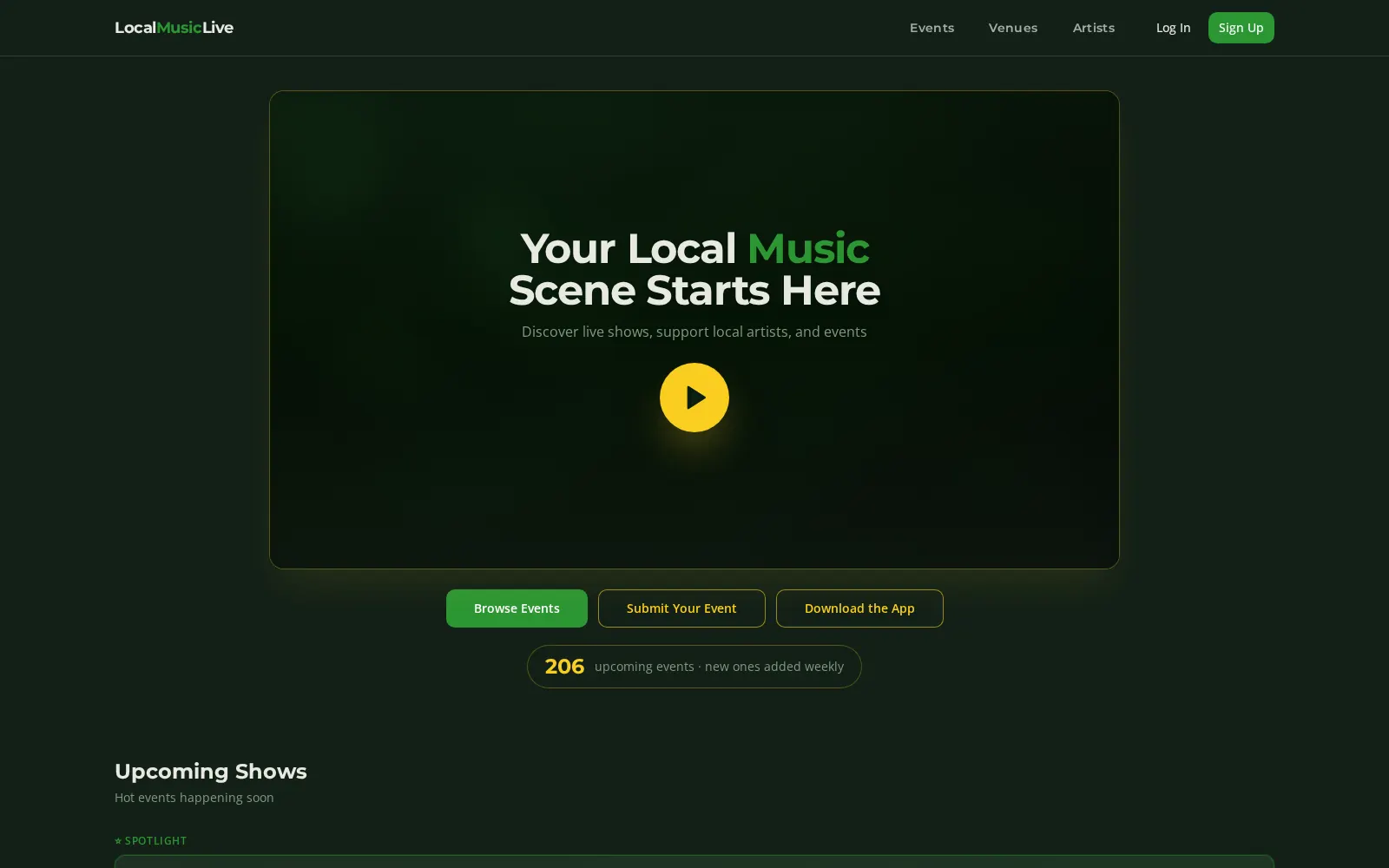
Live-music discovery platform — events, artists, and venues, city by city
Business operating platform
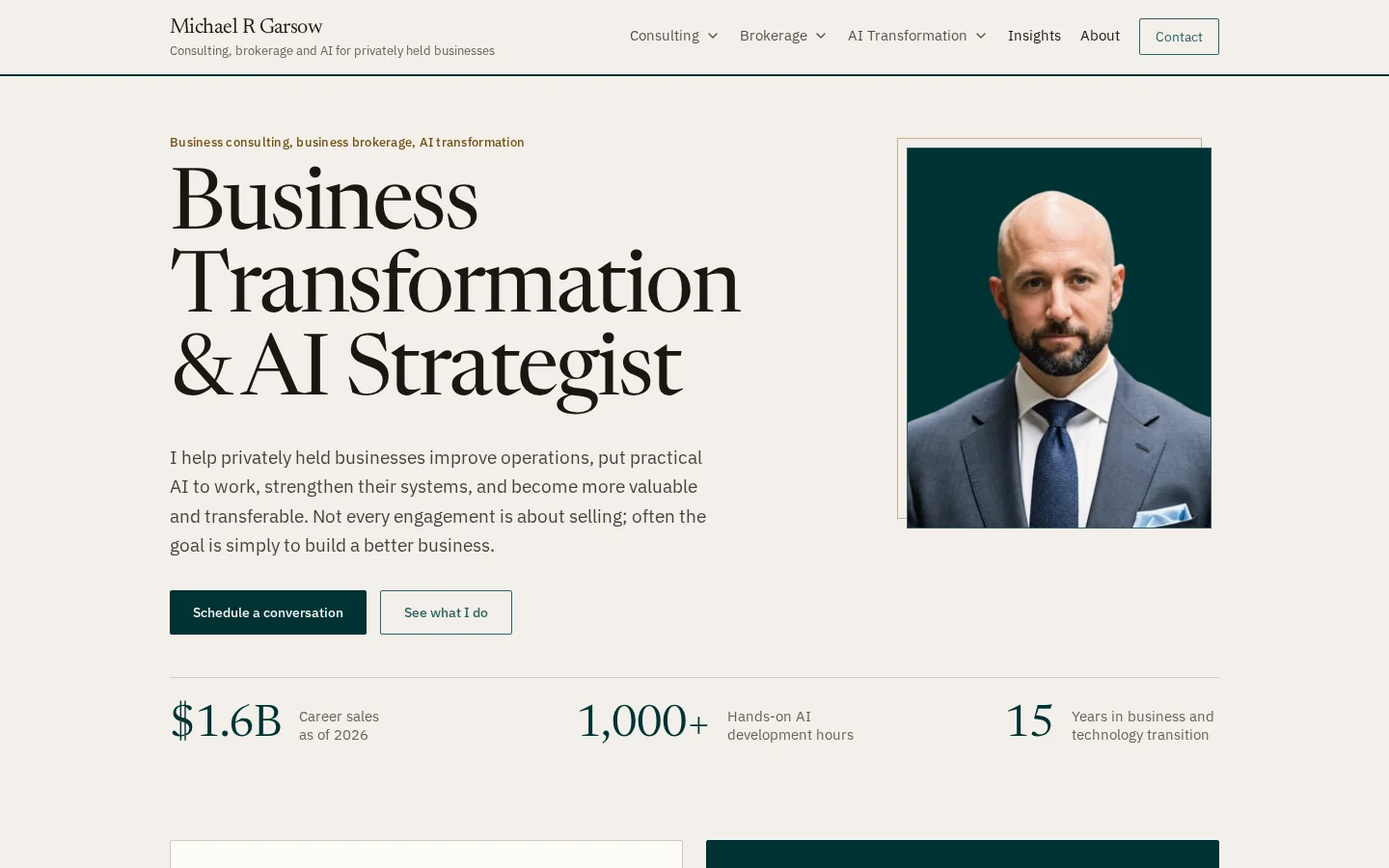
An integrated operating platform for an advisory practice